The City Expands
Ten years of Sihanoukville's urban expansion, seen through satellite imagery — the youth, opportunities, costs, and fates a generation of Chinese left behind here.
A note before we begin: looking at Sihanoukville through satellites — and through one ordinary person's youth
Today, May 24, 2026, the Cambodian government has issued a hard-edged warning: the umbrella protecting scam compounds must be torn out by the roots, or the crackdowns will never end.
From 818 (the August 18, 2019 crackdown on online gambling), through the pandemic, through 918 (the September 18, 2022 crackdown), and now to today — my adopted hometown of Sihanoukville is bracing for another storm.
The first time I came to Sihanoukville, I got to know the city starting from the Two Lions Roundabout.
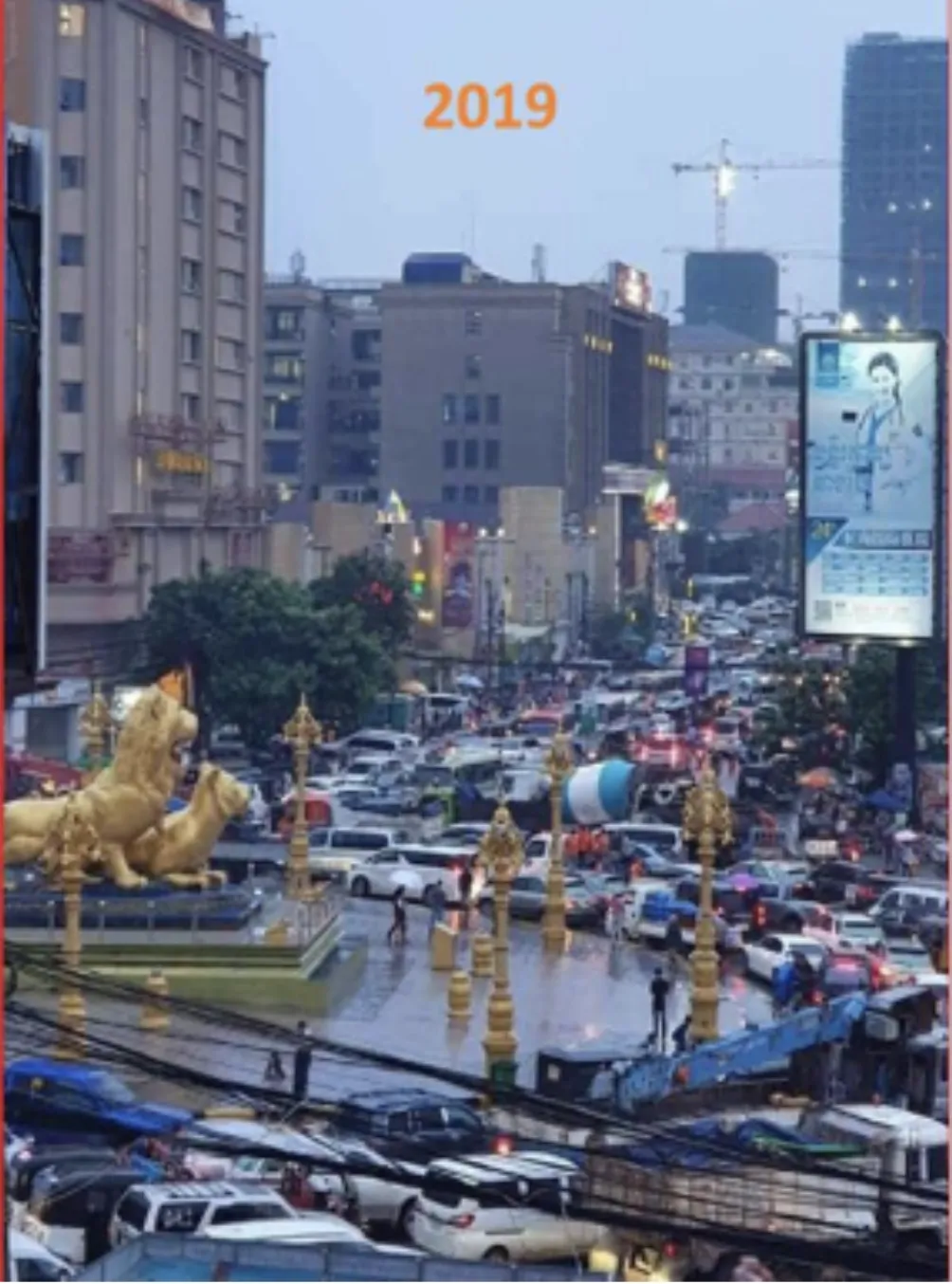
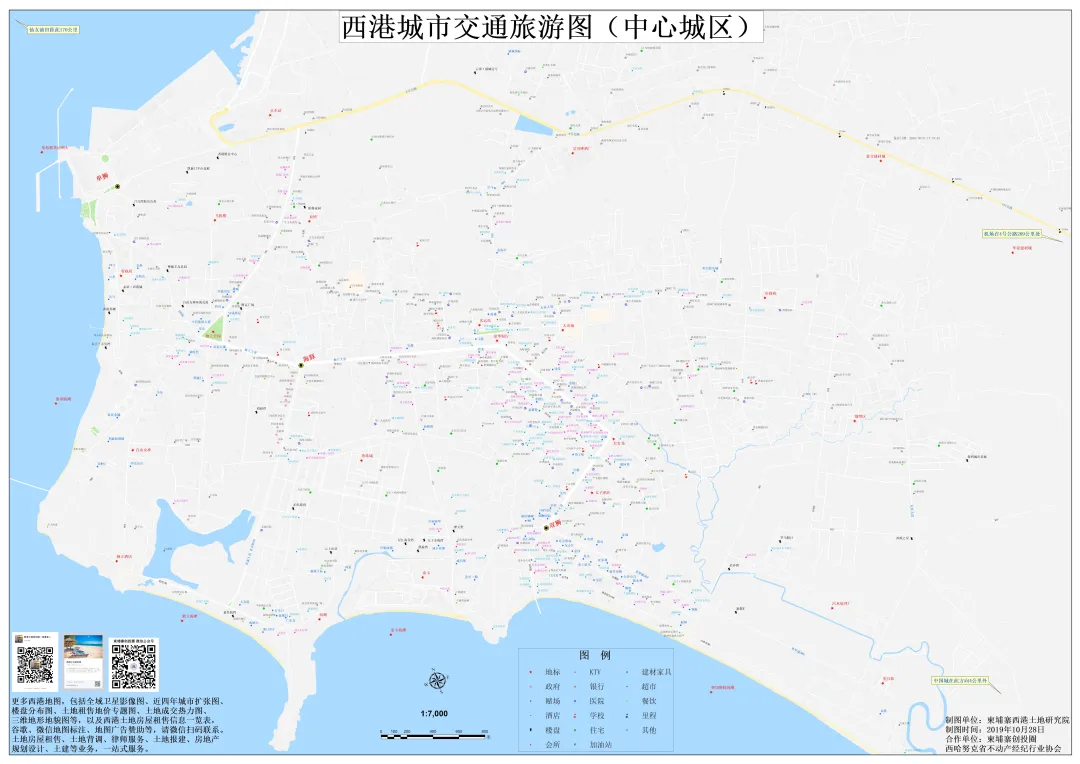
On February 27, 2019, I set out from the Two Lions Roundabout and walked all the way down Independence Boulevard to the Dolphin Roundabout. Both sides of the road were a churn of real estate brokerages, dust, tuk-tuks, construction sites and Chinese-language signs sprouting everywhere. I went into one office after another, walked one plot after another.
One thing left the deepest impression on me back then: coastal land prices were rising at a speed that was almost unimaginable from inside China. A piece of land that had cost a few dollars per square meter a few years earlier now went for four or five thousand. Not double, not ten times — a thousandfold.
That kind of number isn't a story. It's real. For someone born in the 1980s in mainland China, who missed early Shenzhen, who never lived through the first wave of land turning from wasteland into gold, running into this kind of reality in Sihanoukville was impossible not to be shaken by — and impossible not to get pulled into.
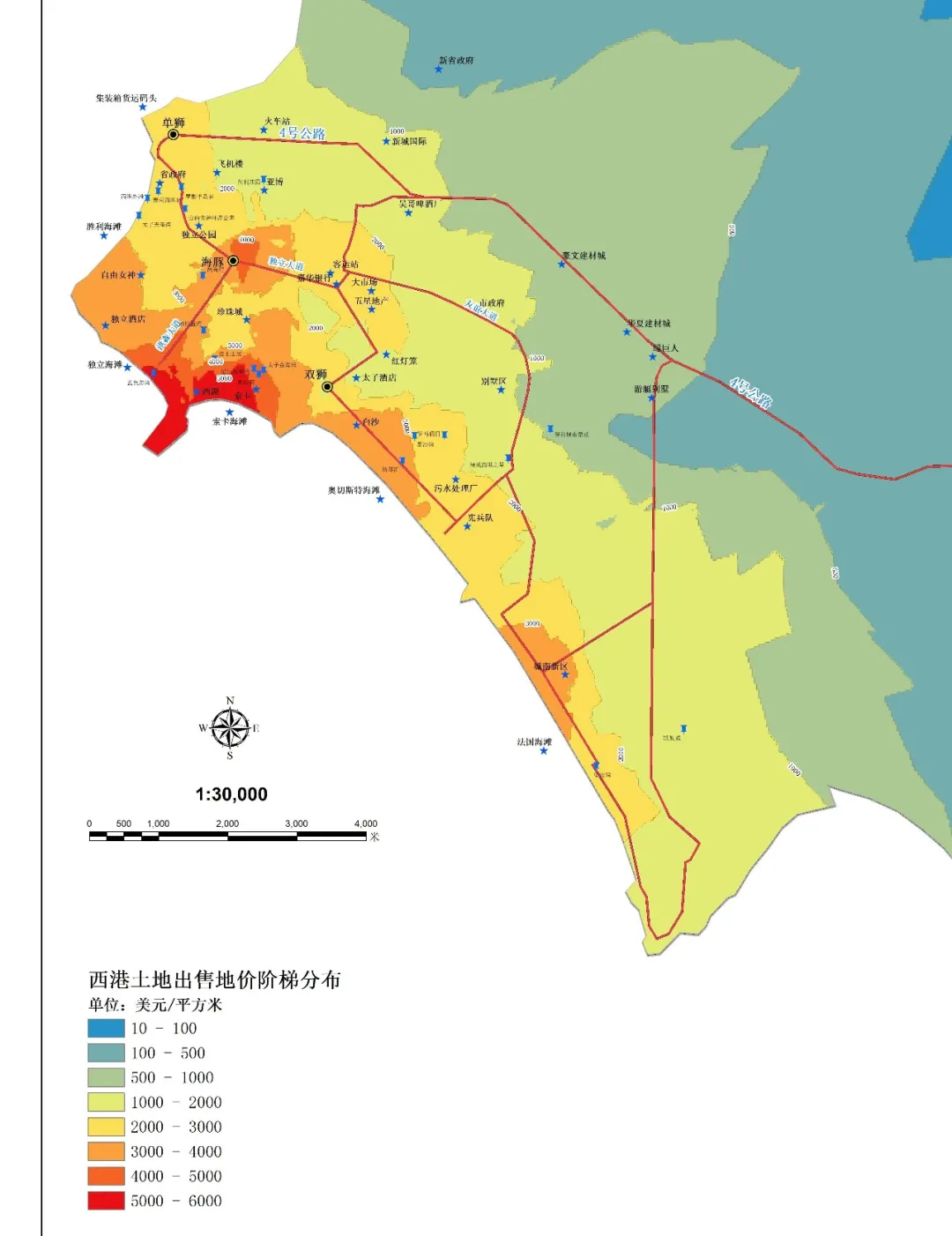
Back then I thought: Sihanoukville is going to be our generation's Shenzhen. Only later did I understand that Shenzhen took more than forty years to reach where it is today, while Sihanoukville compressed multiple stages, multiple cycles, multiple turning points into a single decade. This wasn't urbanization at a normal pace. It was urbanization inside a pressure cooker, catalyzed by grey-and-black-market industries.
Anyone who lived through Sihanoukville in 2018–2019 mostly remembers the same thing: the city changed too fast. Plots that had been empty a couple of years earlier suddenly had buildings on them; what used to be wasteland between you and the sea was now packed with houses; ten years ago you could barely find a building taller than four stories, and now condos, hotels and mixed-use towers rose floor after floor, dozens of them.
Sihanoukville's "growing up" was really two things happening at once: spreading outward, laying down new built-up land at the edges; and growing taller, building higher towers on the same old ground.
I. Spreading outward: the built-up area grew 2.2x in ten years
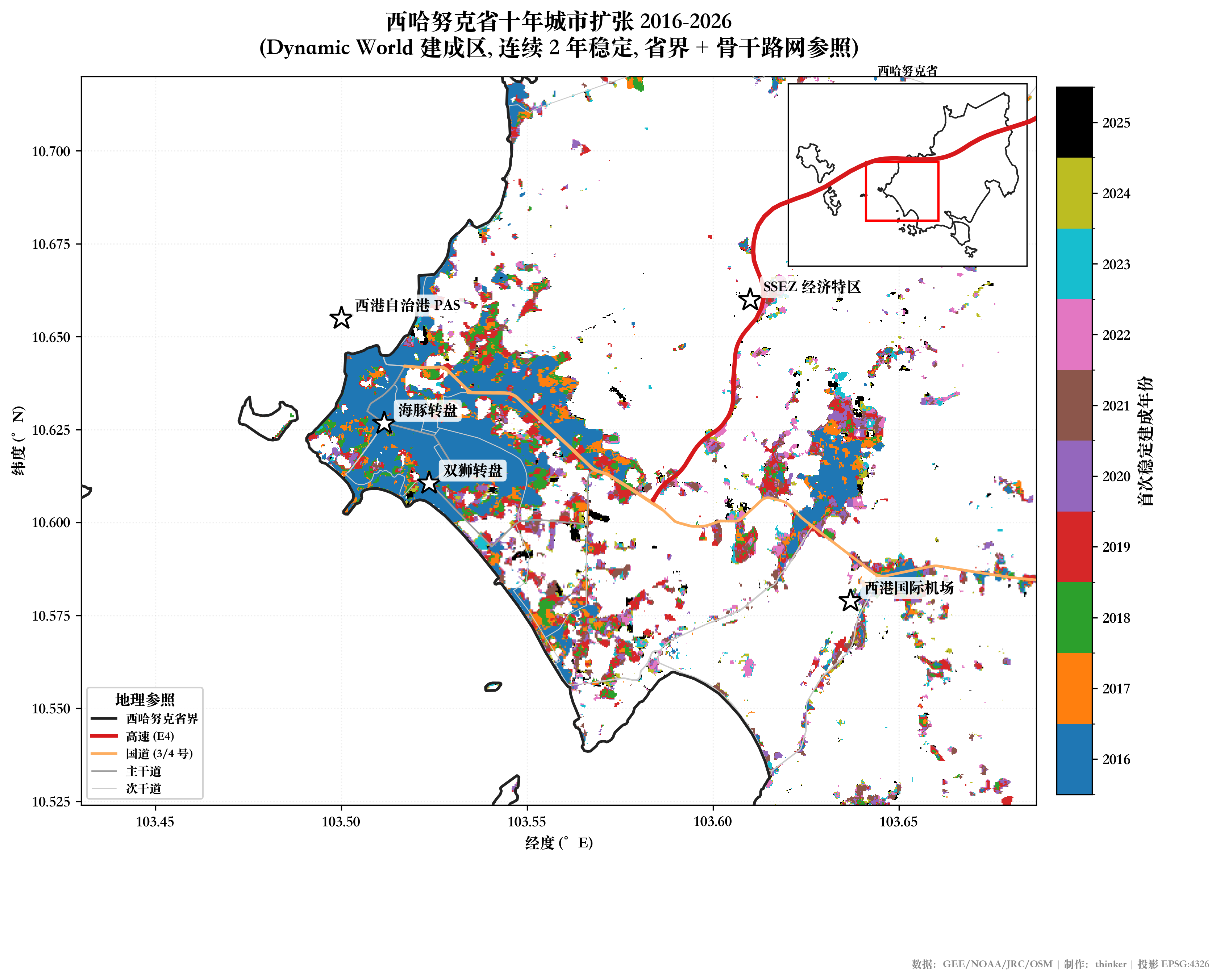
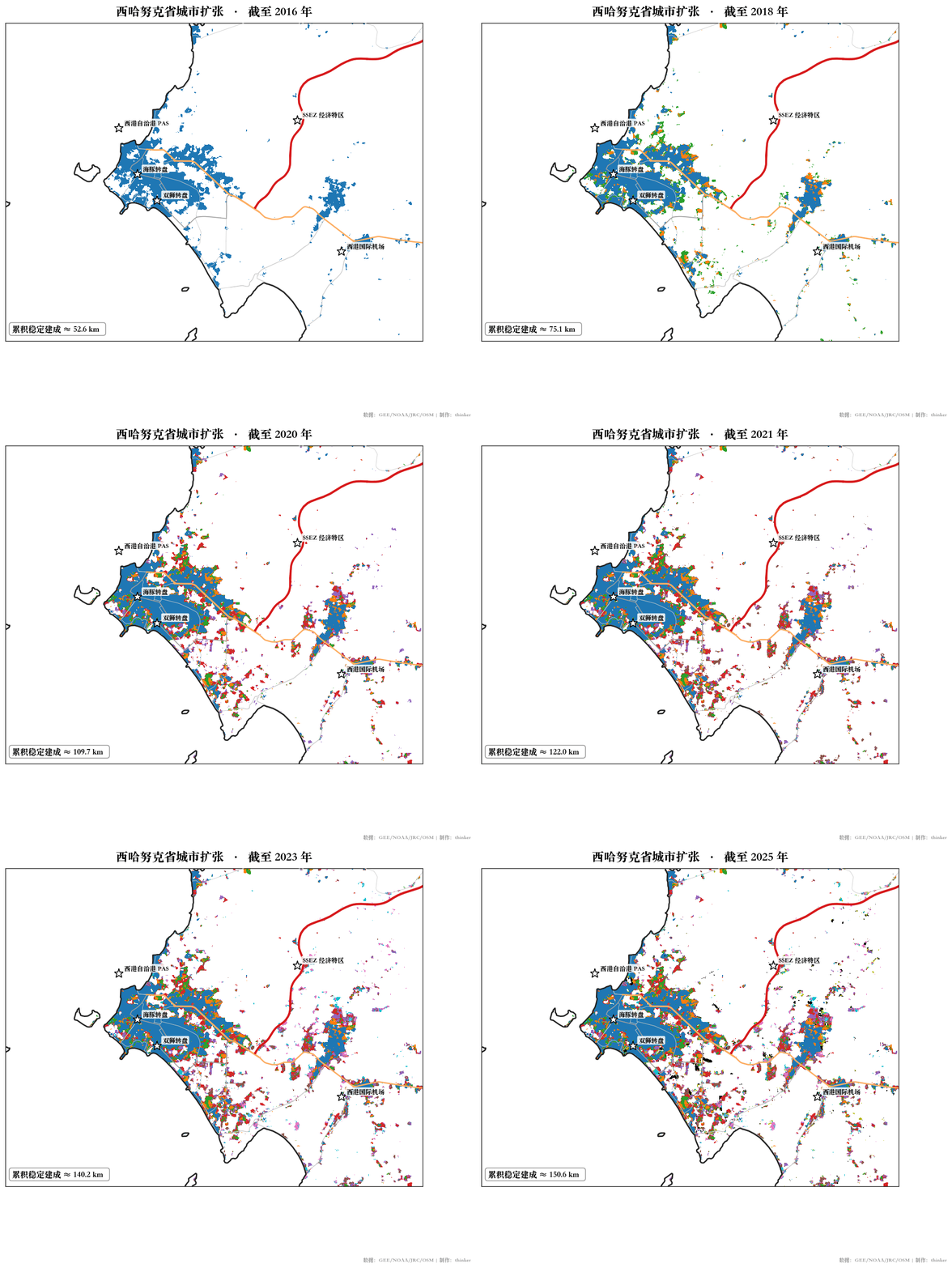
The first map shows ten years of Sihanoukville's urban expansion in a single image. Each color marks "the year this piece of land was first stably built on": blue is the 2016 baseline; later years use sharper colors; black is the most recent, 2025. On the base map, the provincial boundary and main road network are drawn in — red is the Phnom Penh–Sihanoukville Expressway (E4), orange is National Roads 3 and 4.
Using the Dynamic World 10-meter-resolution satellite land-cover dataset, the result is very clear:
The built-up area of Sihanoukville Province went from about 57 km² in 2016 to about 127 km² in 2026 — 2.2x in ten years.
And the curve has gone up almost every single year, with no real reversal. The steepest jump was between 2018 and 2019; growth has eased since 2022.
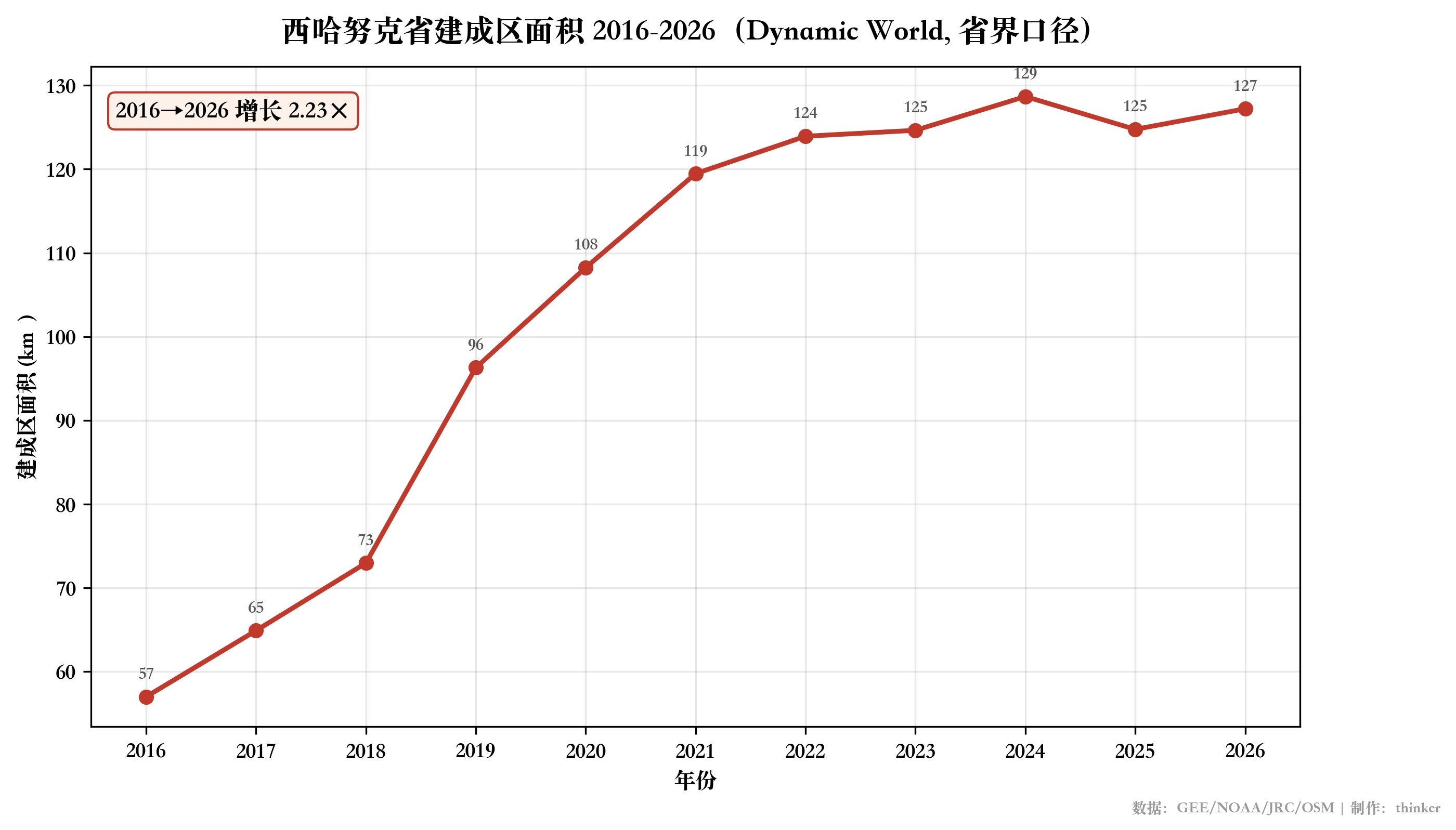
A single number isn't intuitive. The animation makes it clearer: from a small blue blob in 2016, the city grows outward year by year, until by 2025 it has filled most of the urban core and the corridors along the highways. The animation starts at about 53 km² of cumulative built-up area in 2016 and reaches about 151 km² by 2025.
That is the most direct spatial fact about Sihanoukville in the past decade:
It didn't grow gradually. It was shoved outward, in a short span of time, by capital, by people, and by the road network all at once.
A lot of people who were here back then remember those years. Roads were full of construction trucks; concrete, bricks and rebar were rationed by queue; many materials couldn't simply be bought with cash on the spot, you had to lock in supply in advance. A plot of land that today was still dirt road and weeds would, a few months later, be hoarded off, piled, poured, with crews working through the night. People used to say Sihanoukville's pace of construction back then was wilder than early Shenzhen.
That kind of speed makes you excited. It also makes you afraid.
Excited, because for the first time ordinary people could see the possibility of jumping a class. Afraid, because everyone knew that at that speed cars roll over — and everyone was betting they wouldn't be the one holding the bag.
Unlike a traditional city that grows slowly out of industry, population and public services, this looked more like a giant wave crashing on the shore, sweeping land, houses, roads, people and money up together.
One core, three axes: the expansion ran along three lines
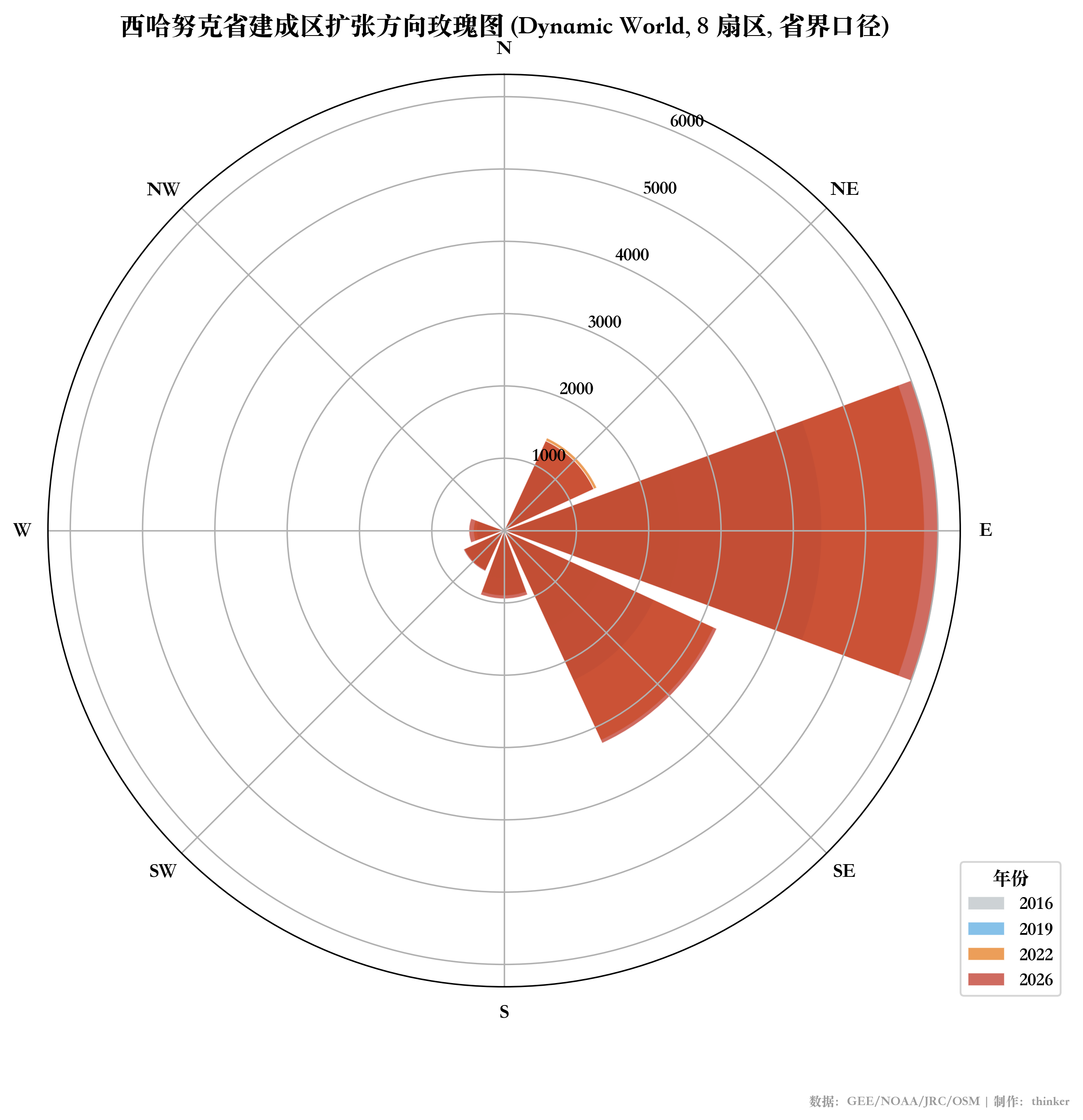
Take the city center — the Two Lions Roundabout — as the origin, slice it into eight directions, and the conclusion is unambiguous: almost all the new built-up land is on the eastern half.
You can sum up the decade of expansion in one phrase:
One core, three axes; the whole city shifting east.
- One core: the Two Lions Roundabout — Sihanoukville's urban origin point, and a fixed landmark in many people's memories.
- Three axes:
- The coastline: running southeast, from the old town toward Chinatown — the main battlefield for the new-town belt and the highest land prices.
- National Road 4: due east, running inland toward the Special Economic Zone — the corridor for industry and logistics.
- Independence Boulevard: the central spine through the old core — the city's functional backbone.
Why is there almost no new construction to the west and north? Because that's old Sihanoukville, and most of it was filled in a long time ago. The new growth there isn't horizontal — it's vertical: same plots, taller buildings.
From a satellite, it's a change in the form of the city. On the ground, it's people's lives being rearranged.
Around the Two Lions Roundabout, along the seafront, down National Road 4, out toward Chinatown — behind every patch of color is a project, an investment, a crew of workers, a row of shopkeepers, a long wait, a price swing up or down. Some people changed their lives on a single piece of land. Others got trapped in a single tower for years.
Some of the stories from those years sound like myths: someone walking away from a single land commission with a million dollars; someone locking up dozens of shop units with deposits, convinced flipping them was pure profit; second-hand and third-hand and fourth-hand "landlords" appearing in the chain; a price negotiated in the morning that was higher by afternoon and pulled off the market by night.
Me, back then — young, hot-blooded, greedy, ignorant and unafraid. After years drifting through Beijing without ever putting down roots, I came to Sihanoukville and thought I had finally seen the historical opportunity that belonged to our generation. I mistook the rising tide of the last three or four decades in China for the natural state of the world; I mistook a highly compressed border port city for a Shenzhen you could replicate.
What Sihanoukville taught me first wasn't wealth, but the cycle; not opportunity, but human nature. Here, judging a deal isn't just about the land price, the contract, the floor plan and the projected return. It's about the people. Following the right person, walking through the right door, matters more than spotting the right plot at the right moment — because most of the traps aren't in the land or in the building, they're in the people. Sihanoukville taught me: business is not the yield on paper, and starting a company is not a game of grit and nerve. The cycle punishes ignorance. Human nature punishes naïveté.
II. The old town and the seafront: locals live on the high ground, outsiders chase the coast
You can't understand urban expansion by area alone. To make sense of the two kinds of "growing up" Sihanoukville went through this decade, you first have to understand one thing: locals and outsiders don't live in the same Sihanoukville.
The heart of old Sihanoukville is the central market. The ground there is higher, it doesn't flood, mosquitoes are fewer — and for decades it has been where locals are most densely settled. Wet markets, restaurants, temples, schools, family life: it all unfolds around that area. The blocks fanning out from the market form what really is the old town, concentrated west and north of the Two Lions Roundabout.
But the outsiders who poured in afterwards, especially the wave of Chinese arrivals, preferred the seafront.
The seafront has imagination in it. You can see the water, you can hear the waves, you can tell a holiday story — and you can tell an investment story. So the coastal belt shot up quickly: from the Two Lions Roundabout heading southeast along the coast, hotels, condos, shops and restaurants went up tower by tower.
The most direct consequence was land prices.
Over ten years, Sihanoukville's coastal land went through extreme appreciation. Plots that many locals had once written off as "impractical," "uncomfortable to live in," "too far from where life actually happens" suddenly became core assets in the eyes of outside capital. For the first time, plenty of people realized: a piece of land no one had bothered to value could, in a few short years, rewrite a family's fate.
The day I walked down Independence Boulevard to the Dolphin Roundabout, that shift hit me head-on.
The prices coming out of brokers' mouths weren't numbers on paper — they were a kind of stimulant. A few dollars, a few dozen, a few hundred, a few thousand. Each step up the price ladder triggered the next one, and standing inside it, you lost your judgment easily. You started believing you weren't buying land, you were buying a ticket to the future.
Only later did I learn that some tickets take you to the shore, and some take you straight into the whirlpool.
The hollows left behind by the boom: stalled buildings, scattered everywhere
Not every building that went up was actually put to use.
Sihanoukville still has a large number of stalled buildings, scattered across different districts: around the Two Lions Roundabout, along the coast, on both sides of National Road 4, throughout the new town. Some are only frames. Some have their façades half done. Some have the glass already installed but have stood quiet for years.
From a satellite, they count as "built-up." From the perspective of city life, they were never really finished.
This is exactly the limit of remote-sensing analysis: satellites can tell us a building exists, but not whether it's used, whether it's rented, whether the title is disputed, whether the investor is still around, whether the cash flow has dried up.
Behind one unfinished tower there might be dozens of loans, several rounds of partnerships, stacks of contracts, repeated promises — and a long list of futures that never came true.
Some of the people I know are that cost, in human form. Someone leased land and built; through the pandemic, they ground their teeth and bled out the last drop. Someone borrowed from friends and relatives, thinking they could risk one big bet in Sihanoukville, and when the building never rose they couldn't face anyone again and jumped. Someone, after a failed investment, was then kidnapped on top of it — Sihanoukville has been a nightmare for them ever since.
Every stalled building is not just an "unfinished project." It might be a family falling apart, an entrepreneur's last gamble, a young person's misjudgment, the illusion of an era.
Anyone trying to build a business pays tuition. The problem is, some tuition fees let you stand back up, and some take half a lifetime. Most ordinary people don't get many chances to be wrong. A few swings up and down, and the rest of your life is gone.
III. Growing taller: the old town reaches for the sky
Spreading outward means pushing out. But the other half of Sihanoukville's story this decade happened inside the old town: the same plot of land going from two or three stories to dozens, packing in many times more people and businesses.
This is the second kind of "growing up": going vertical.
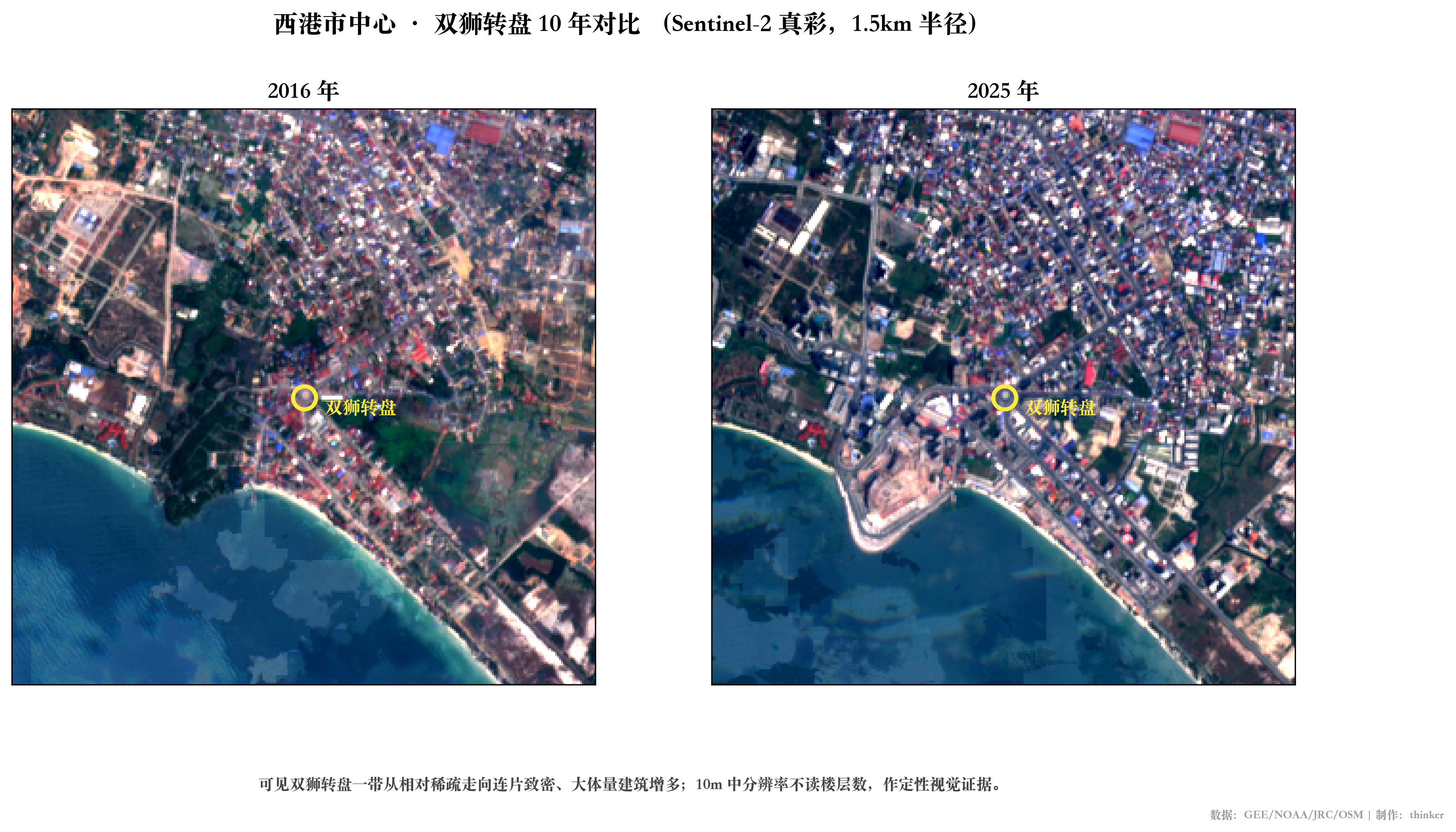
This is a satellite comparison of the 1.5 km radius around the Two Lions Roundabout in 2016 and 2025. In 2016 you can still see plenty of low-rise blocks and empty plots; by 2025 the lots are packed solid with buildings, with a clear jump in the number of large-footprint structures.
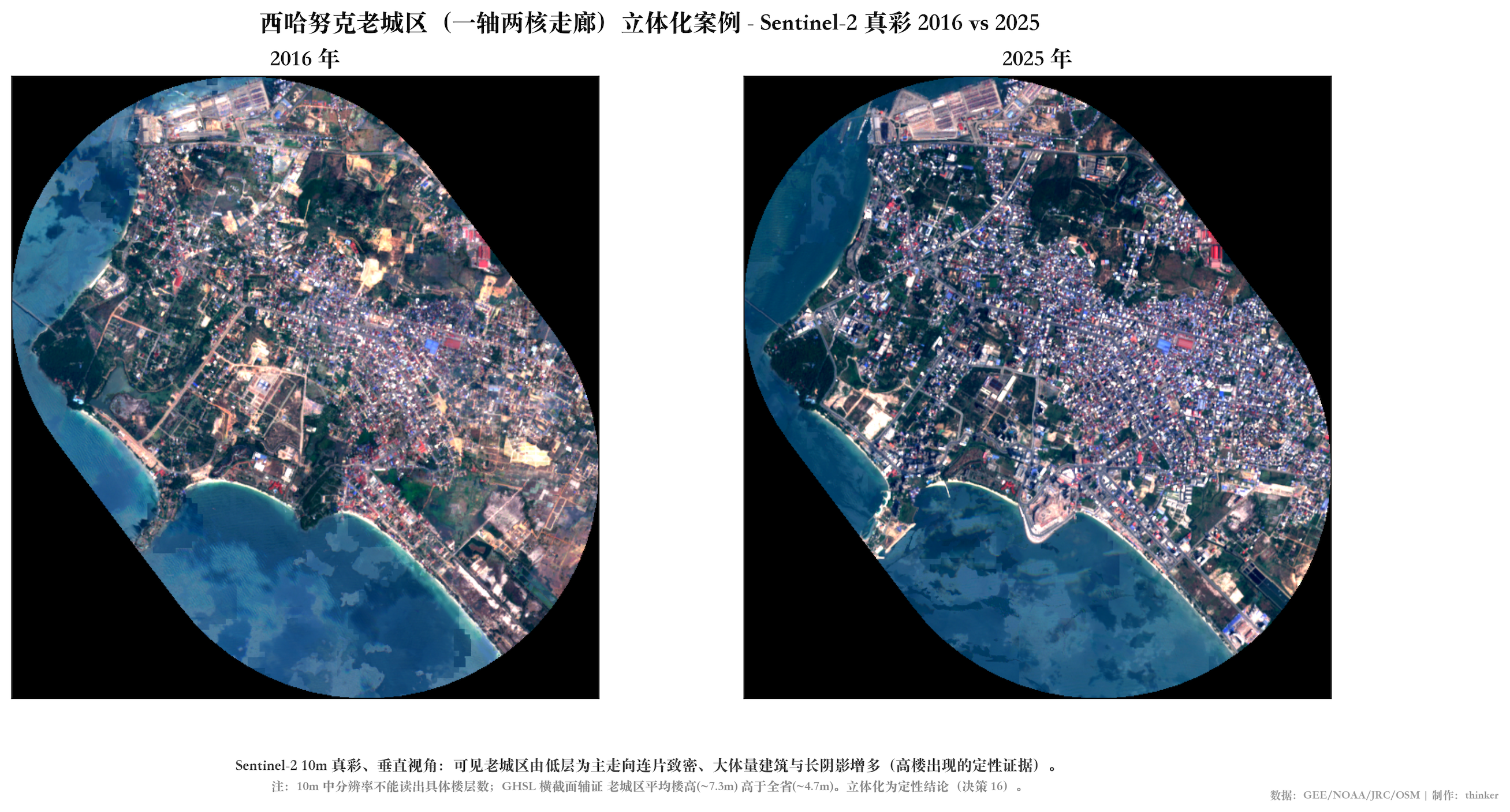
Widen the view to the whole old-town corridor along Independence Boulevard, from the Two Lions Roundabout to the Dolphin Roundabout, and the change becomes even clearer: in 2016 there were still continuous stretches of low-density blocks; by 2025 the corridor is almost fully built out, with a chain of unmistakably large, long-shadowed buildings.
The Two Lions Roundabout is a shared memory for a lot of the Chinese in Sihanoukville. Some rented apartments nearby, negotiated deals, waited for friends, sat in tuk-tuks; some passed through here in their proud moments, some passed through here with nothing left in their pockets. The center of a city is often also a crossroads of fate.
The old town reaching for the sky means land is getting more expensive, and it means the city is getting more crowded. Low-rise blocks get replaced by towers, the original human scale of life gets squeezed by a commercial scale. Alleys you used to walk through become construction hoardings, building sites, hotel porte-cochères and parking lots. This isn't simply "modernization." It's compression: ten years of capital, people and desire compressed onto the limited land of a tropical port city.
In a lot of mainland Chinese cities, change is something a generation lives through gradually. Not in Sihanoukville. Sihanoukville crammed the price spike, the financing rush, the construction binge, the bubble, the correction, the stagnation and the hunt for new exits all into a tiny window of time. Inside something like that, it's very hard to stay clear-headed.
Sihanoukville let me see that the complexity of human nature isn't a concept from books — it's silence at a contract table, promises across a dinner banquet, the face that turns on you in a crisis, the closeness when there's money, the cold cut-off after a loss. Some of these you only understand once they have hurt you. And really, only pain can shake a person out of a frenzy.
IV. The city "lights up": nighttime lights
When a city grows, it gets brighter at night. The VIIRS satellite, which is built specifically to record nighttime lights, lets us measure that.
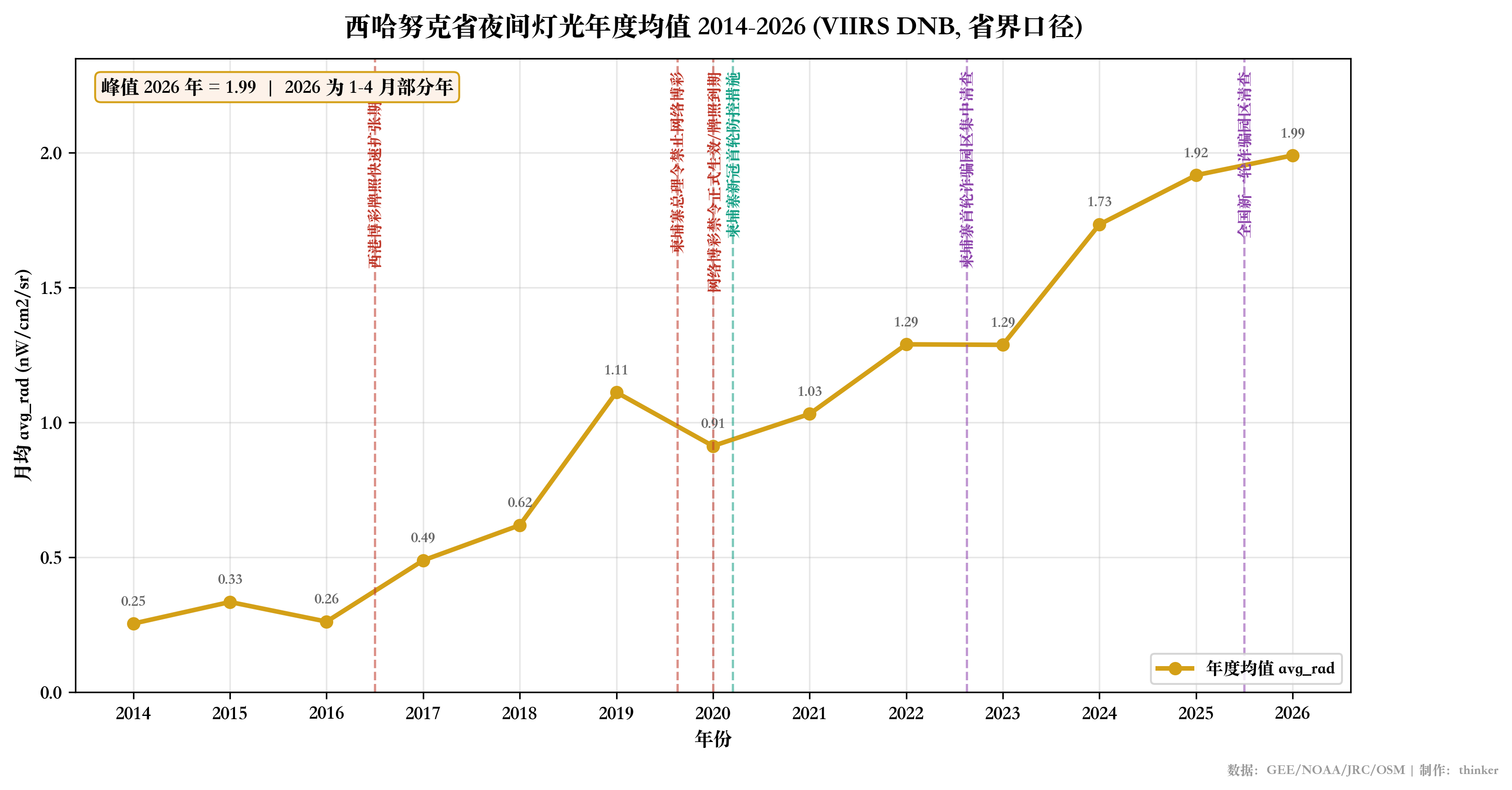
The nighttime lights of Sihanoukville Province have, on the whole, gotten brighter since 2014, and the last few years are the brightest of all. That tracks with the relentless expansion of built-up land: more buildings, more people, more roads, more commercial activity — more lights.
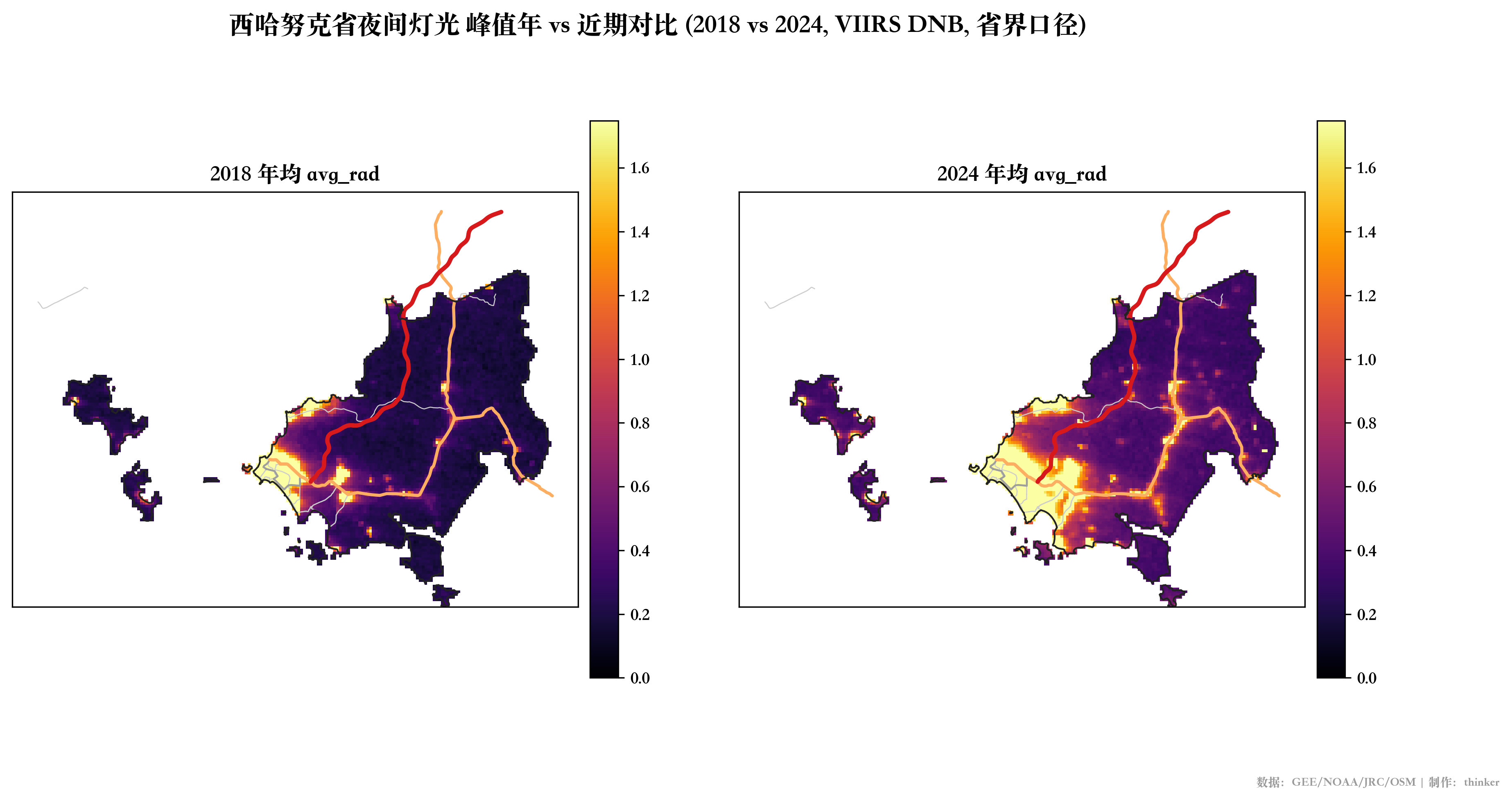
Lay the 2018 and 2024 night-light maps next to each other and the gap is even more obvious. In 2018 the bright zone is mostly concentrated around the Two Lions Roundabout in the city core. By 2024, the entire urban core is brighter, the bright zone has clearly spread, the corridor along National Road 4 and the strip along the coast have lit up, while the rest of the province is still mostly scattered pinpoints of light.
From 2018 to 2019, the lights jumped hardest; from 2019 to 2020, they dipped only slightly; after that, they kept rising. The 2019 policy shift and the pandemic that followed really only suppressed the growth rate of the lights — they didn't actually turn the city's absolute brightness around.
This matches what we saw on the ground. A lot of people left, but the buildings, roads, restaurants, hotels, condos, logistics and industrial-park properties they left behind did not disappear. The city did not roll back ten years. It just entered a new phase.
There's a particular cruelty to a night-light map.
It doesn't care who made money, who lost money, who stayed, who left. It only records where it's still bright, where it's gotten brighter, where the darkness has been lit.
And Sihanoukville, this decade, really has gotten brighter and brighter.
It's just that behind some of those lights is wealth, and behind others is debt; some are opportunity, others are loneliness; some are businesses open through the night, and some are people who can't sleep.
A lot of people became fuel.
V. Putting the decade on a single timeline
Line the rhythm of the data up against the key moments of the past decade in Sihanoukville, and you can see how they interlock:
- Around 2016: outside capital and people start pouring in faster; built-up area and nighttime lights begin a visible climb; coastal land prices enter their rapid-appreciation phase.
- 2018 to 2019: expansion and light-growth rates peak; construction in the city hits its hottest stretch.
- Second half of 2019 into 2020: the policy environment shifts; COVID lands on top of it; Sihanoukville enters about three years of plateau growth — still growing, but slower.
- After 2022: the city enters a digestion phase, working through what's already built; some buildings stall; some properties hunt for new uses.
- After 2024: some of the data accelerates again — the city has not stopped; the logic of growth has just changed.
One sentence: this decade in Sihanoukville was "kept growing, with one foot stomped on the brake along the way" — not "spiked, then died."
This city once ran too fast — too fast for the roads, the institutions, the public services, the business ethics and people's own psychology to keep up. Then it was forced to slow down and start absorbing the aftereffects of high-speed expansion. Now it's still moving, but there's no going back to that earlier state of disorderly, full-throttle acceleration.
I've seen its bustle and I've seen its emptiness; I've seen the opportunities it offered and the people it swallowed; I've watched it inflate people, and I've watched it sober them up.
If there's one thing Sihanoukville has taught me, it isn't "be bold and you'll get rich," and it isn't "when opportunity knocks, push all your chips in." Quite the opposite. The first lesson Sihanoukville gave me was this: people who have never lived through a downturn are the easiest to confuse a rising tide with their own ability, an era with themselves, dumb luck with foresight.
VI. Sihanoukville is still growing
Back to the question we started with: how exactly did Sihanoukville grow up this decade?
The answer: on two legs at once.
- Horizontally: the built-up area expanded 2.2x in ten years, unfolding along "one core, three axes" — the core being the Two Lions Roundabout, the three axes being the coastline, National Road 4, and Independence Boulevard; the overall trend is the whole city shifting east.
- Vertically: the old town, especially the area west and north of the Two Lions Roundabout, had no more room to spread, so it grew skyward instead — from two or three stories to dozens.
Spreading out, growing up — both things happening at once. Threaded through them: the spatial split between locals and outsiders, the wild swings in coastal land prices, the silence of the stalled buildings, the maturing of road and port infrastructure, and the opportunities, risks, scattering and rooting-down of a generation of Chinese here.
That is what Sihanoukville has been over the past decade. Not simply "a fishing village turned city." Not simply "feathers on the ground after a bubble pops."
More precisely: Sihanoukville is a port city that was rapidly rewritten by a highly compressed wave of globalization, capital flow and border-city urbanization.
What it left behind isn't just buildings and roads. It's also a lot of people's youth.
Over eight years, I went from a young Chinese arrival to someone who has put his life, his work, his marriage, his debts, his hopes and his future all on Sihanoukville. My youth wasn't given to some abstract city — it was given to this very real piece of land: the wind through the coconut palms, the white-sand beaches, the freshly paved roads, the lights of the industrial parks.
The people who stay aren't necessarily the most successful, but they are the ones who know the real texture of this city. Because only by actually staying do you learn that a city isn't a patch of color on a satellite map — it's the daily living, the choices, the patience, the keeping-going.
Sihanoukville's urban skeleton is already in place. The port, industry, tourism, real estate and the influx of outsiders have reshaped its foundation. The Sihanoukville of the future shouldn't have to rely on short-cycle hot money from abroad — it needs genuinely stable, transparent, long-term industry and city governance.
A city that has not yet set, has not yet hardened, still has its chance.